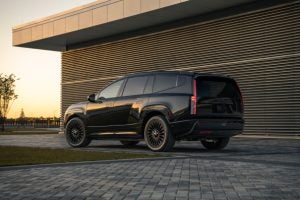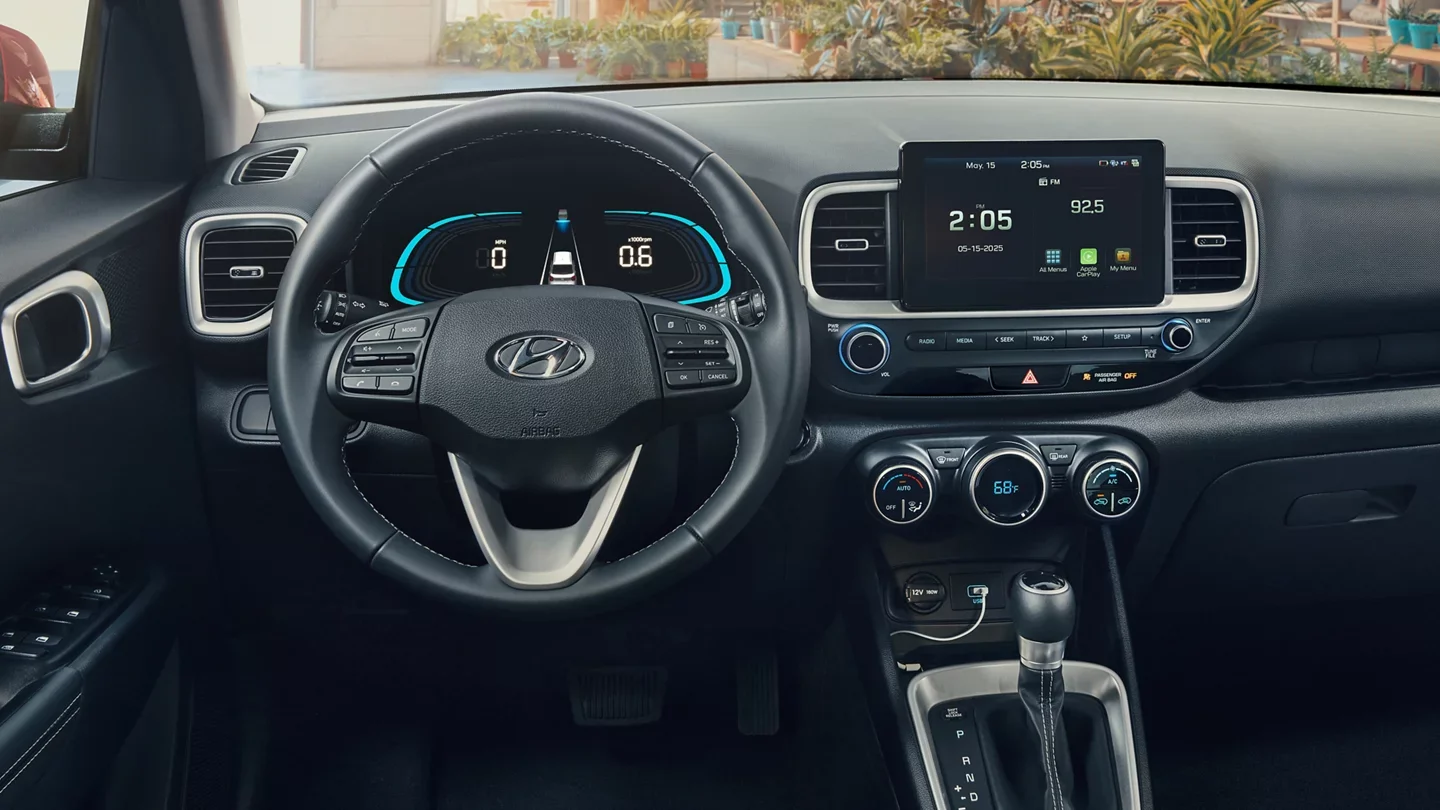



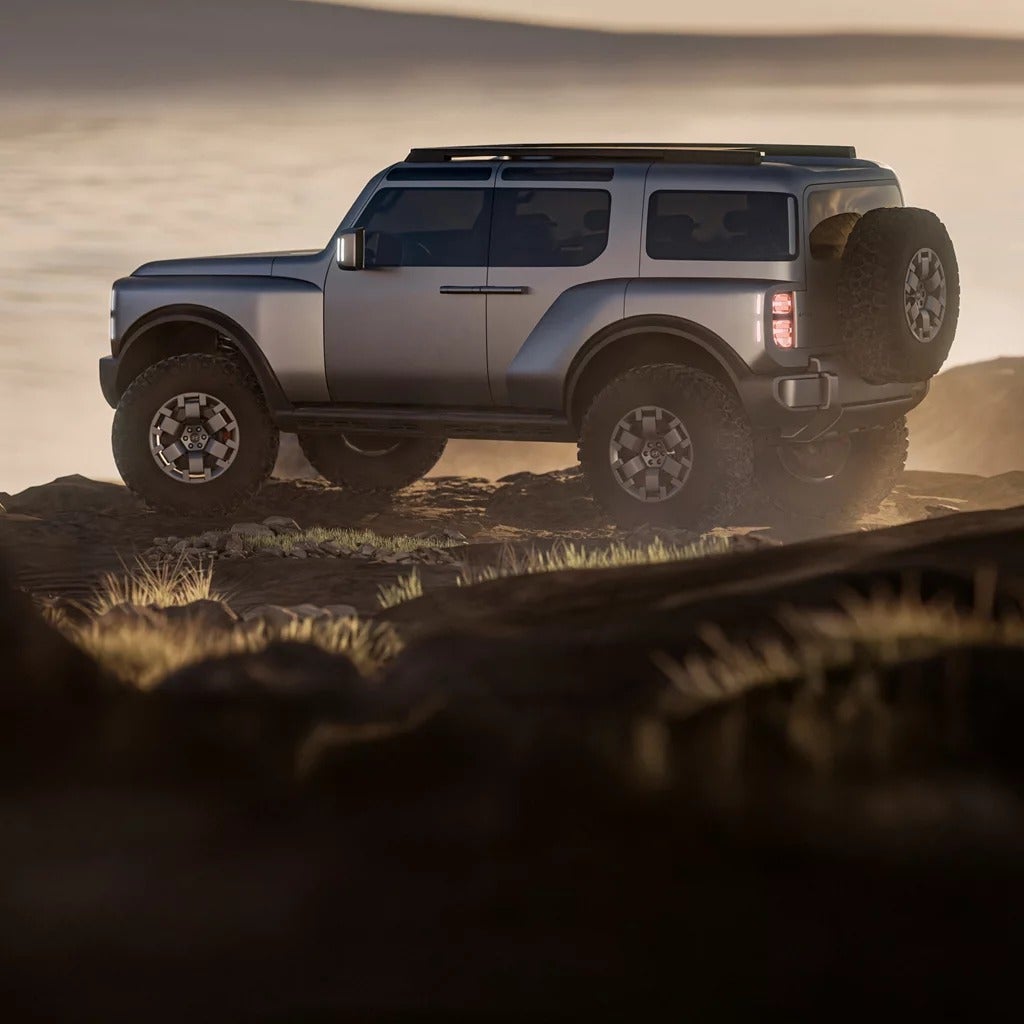
If you're weighing the 2027 Hyundai Palisade Vs 2026 Honda Pilot, a handful of family questions probably matter most. Will everyone fit? Is it comfortable on the daily grind? What will fuel cost, and how does it handle a wet Olympia morning? We'll compare them head-to-head below. You can also browse our new inventory to see current Palisade models as you read.
2027 Hyundai Palisade vs 2026 Honda Pilot: Quick Verdict
The Palisade is the better overall SUV, and the reason isn't subtle: it offers a powertrain the Pilot doesn't have. A 329-hp hybrid returning 34 mpg combined has no Honda answer in this segment, and for anyone running I-5 daily that single fact reshapes the ownership math.
Start with the gas V6 models for a like-for-like baseline, since those are closely matched. Then look at the Palisade hybrid separately, because it changes the decision entirely.
At-a-Glance Comparison
Powertrain: The Palisade offers a 287-hp V6 or an available 329-hp hybrid system, while the Pilot has one 285-hp V6.
Tech: Both offer a 12.3-inch touchscreen, and the Palisade adds available dual panoramic displays and a Bose 14-speaker system on select trims.
Space: Both seat up to eight, with the Palisade ahead in second-row legroom and the Pilot slightly ahead in third-row legroom.
Safety: Both come with a suite of driver-assistance features, Hyundai SmartSense on the Palisade and Honda Sensing® on the Pilot.
Off-road: The Palisade XRT PRO and Pilot TrailSport both add all-terrain-minded hardware for rougher roads.
Powertrain and Performance: V6 Power vs. 329-HP Turbo Hybrid
The two V6 engines are closely matched on paper. The Palisade also adds a hybrid option the 2026 Pilot doesn't offer. Peak horsepower is only part of the picture, though. On I-5, how an SUV responds in traffic and settles on a long drive often matters more to families than a spec sheet number.
Palisade Engine Options and Hybrid Efficiency
The Palisade's 3.5-liter V6 makes 287 hp at 6,400 rpm and 260 lb-ft at 5,000 rpm, paired with an 8-speed automatic. The available 2.5-liter turbo-GDI hybrid combines a 258-hp gas engine with an electric motor for 329 hp and 339 lb-ft of total system output. It uses a 6-speed automatic and a 1.65 kWh lithium-ion battery. Both the V6 and the hybrid are Palisade options.
Fuel economy is where the hybrid stands out. These are EPA estimates for city, highway, and combined driving:
V6 FWD: 19/26/22 mpg.
V6 AWD: 18/24/20 mpg.
V6 XRT PRO AWD: 16/22/19 mpg.
Hybrid Blue SEL and Blue SEL Premium FWD: 33/35/34 mpg, with an estimated 619-mile range on an 18.2-gallon tank.
Hybrid Limited, Calligraphy, and Calligraphy Black Ink FWD: 31/32/31 mpg.
Hybrid AWD configurations, including SEL, SEL Premium, Limited, Calligraphy, and Calligraphy Black Ink: 29/31/30 mpg.
Actual mileage varies by driving conditions, trim, and drivetrain. Electric assistance can also make the Palisade feel more responsive at modest speeds, which helps around town.
How the Pilot's 285-HP V6 Compares
Every Pilot trim uses a 3,471-cc V6 with 285 hp and 262 lb-ft through a 10-speed automatic. It's a refined engine with conventional manners, and for a shopper who wants one engine and no decisions to make, that simplicity has value. It also means there's no efficiency option when gas prices move.
EPA estimates for the Pilot are:
2WD Sport and EX-L: 19/27/22 mpg.
AWD Sport, EX-L, Touring, Touring Blackout, Elite, and Black Edition: 19/25/21 mpg.
TrailSport AWD: 18/23/20 mpg.
Those track closely with the Palisade V6. The difference is what sits above them: the Palisade hybrid reaches 34 mpg combined, which the Pilot has nothing to answer with on a daily run toward Tacoma.
Cabin Technology and Interior Comfort
The Palisade delivers an integrated, upscale display experience. Honda takes a simpler route with a plainer dashboard and more physical controls, which some drivers prefer and which is worth testing for yourself. Where the Palisade pulls ahead is everything past the front row.
Palisade's 12.3-Inch Touchscreen with Navigation and Available Dual Panoramic Displays
The Palisade has a 12.3-inch touchscreen with onboard navigation, plus wireless Android Auto and Apple CarPlay. The available dual panoramic display pairs that screen with a 12.3-inch digital cluster. It's listed on SEL, SEL Premium, XRT PRO, Limited, Calligraphy, and Calligraphy Black Ink, but not SE.
Comfort features climb with the trim. A Bose 14-speaker system is listed on XRT PRO, Limited, Calligraphy, and Calligraphy Black Ink. Calligraphy and Calligraphy Black Ink add Premium Nappa Leather and front and second-row relaxation modes. 64-color ambient lighting is listed on SEL Premium, XRT PRO, Limited, Calligraphy, and Calligraphy Black Ink. Availability varies by trim.
Pilot's Infotainment and Cabin Layout
The Pilot offers a 12.3-inch color touchscreen and a 10.2-inch digital instrument cluster on every trim, with Google built-in standard including three years of unlimited data for in-vehicle apps. Audio runs a 245-watt nine-speaker system on Sport, EX-L, and TrailSport, stepping up to a 12-speaker Bose setup from Touring and above.
Both have big screens. What separates them is what surrounds those screens: Nappa leather, 64-color ambient lighting, and a 14-speaker Bose system on upper Palisade trims against the Pilot's more utilitarian approach.
Space, Seating and Family Versatility
Both SUVs can seat up to eight, but their strengths differ by row. Palisade vs Pilot size comes down to who sits where. The Palisade seats 7 or 8. The SE has 8, while SEL, SEL Premium, and Limited have 7 with an optional 8-seat configuration. XRT PRO, Calligraphy, and Calligraphy Black Ink have 7. Second-row captain's chairs are standard on SEL, SEL Premium, XRT PRO, Limited, Calligraphy, and Calligraphy Black Ink, and bench seating is standard on SE and optional on SEL, SEL Premium, and Limited.
The Pilot seats 8 on Sport, EX-L, Touring, Touring Blackout, Elite, and Black Edition, and 7 on TrailSport. Its stowable, fold-flat second-row center seat is standard on EX-L, Touring, Touring Blackout, Elite, and Black Edition, which is a genuinely clever way to switch between eight seats and walk-through access without committing to either. The TrailSport goes the other direction with captain's chairs and seven seats.
Legroom in inches, front, second row, and third row:
Palisade: 44.2, 43.0 (41.4 for hybrid), and 32.1.
Pilot: 41.0, 40.8, and 32.5.
The Pilot takes the third row by four-tenths of an inch. The Palisade leads the front row by 3.2 inches and the second row by 2.2, which are the seats people actually occupy.
Cargo, in cubic feet, is close. The Palisade has 19.1 behind the third row, 46.3 behind the second row, and 86.7 behind the front seats. The Pilot has 18.6 standard behind the third row, up to 21.8 on Sport and TrailSport and up to 22.4 on other trims. Behind the second row, the Pilot has 48.5 standard, up to 59.5 on Sport and TrailSport and up to 60.1 on other trims. Behind the first row, it has 87.0 standard, with a maximum of 111.8 to 113.7 depending on trim. Elite and Black Edition are 86.5 standard and 112.1 maximum.
Which One Fits Your Household?
School pickup goes easily in the Palisade thanks to its second-row comfort and captain's chairs. On road trips, its hybrid range and cabin features are what you'll notice. If you're hauling gear, check the Pilot's cargo figures against your actual load. And for towing a small trailer, confirm the needed equipment with our team.
Safety: Hyundai SmartSense vs. Honda Sensing®
Both SUVs offer substantial driver-assistance technology, and features vary by trim. The Palisade's standard Hyundai SmartSense includes Highway Driving Assist and Forward Collision-Avoidance Assist, along with Blind-Spot Collision Warning. Highway Driving Assist is useful on stop-and-go I-5 commutes.
Honda Sensing on the Pilot includes the Collision Mitigation Braking System, Road Departure Mitigation, Adaptive Cruise Control with Low-Speed Follow, Lane Keeping Assist, and Traffic Sign Recognition, standard across the lineup. Both suites are thorough. Ask us which items come on the exact Palisade trim you're considering.
Off-Road Capability: Palisade XRT PRO vs. Pilot TrailSport
Neither is a dedicated off-roader. Both are family SUVs with added capability, which is plenty for gravel roads near Capitol Forest or a muddy trailhead in the rain.
The Palisade XRT PRO runs HTRAC AWD with Terrain Mode Select and an electronic limited-slip differential, plus Ground View Monitor, front and rear recovery hooks, an integrated tow hitch, and 18-inch all-terrain tires. Ground clearance rises to 8.4 inches from the standard Palisade's 7.4.
The Pilot TrailSport counters with 265/60R18 rugged-terrain tires, off-road-tuned suspension, and 8.3 inches of unladen clearance. Its real differentiators are Trail Torque Logic, underbody skid plates with a front recovery point, a hitch receiver doubling as a rear recovery point, and a full-size spare. TrailWatch and the Trail and Sand modes reach Touring and above, so those aren't TrailSport-specific. The XRT PRO still holds the harder card: an electronic limited-slip differential the Pilot doesn't offer at any trim.
Why the Palisade Is the Better Overall SUV
The case rests on a combination: an available 329-hp hybrid returning 33/35/34 mpg on Blue SEL FWD, a cabin that reaches genuinely premium at Calligraphy, and comfort features that scale further down the lineup than Honda's do. The Pilot answers with cargo packaging and a clever removable middle seat, and if those are your priorities it's the right SUV. For most households weighing power, efficiency, and cabin quality together, the Palisade is the stronger buy.
Here are a few notes on trim fit. Families who mostly commute and haul kids will likely enjoy the mid-level SEL and SEL Premium trims with second-row captain's chairs. Adventure-minded households in the Pacific Northwest should look at the XRT PRO. Compare similarly equipped trims before judging value.
Schedule a Palisade Test Drive at Titus-Will Hyundai
The spec sheets take you only so far. Come drive the Palisade with the passengers and gear you haul every week, and take the gas V6 and the hybrid back to back so you can feel what that 329-hp system does off the line.
Schedule your test drive online or call 360-515-7291. We're at 2255 Carriage Loop SW in Olympia, and we'll have the trim you want pulled up and ready when you arrive.